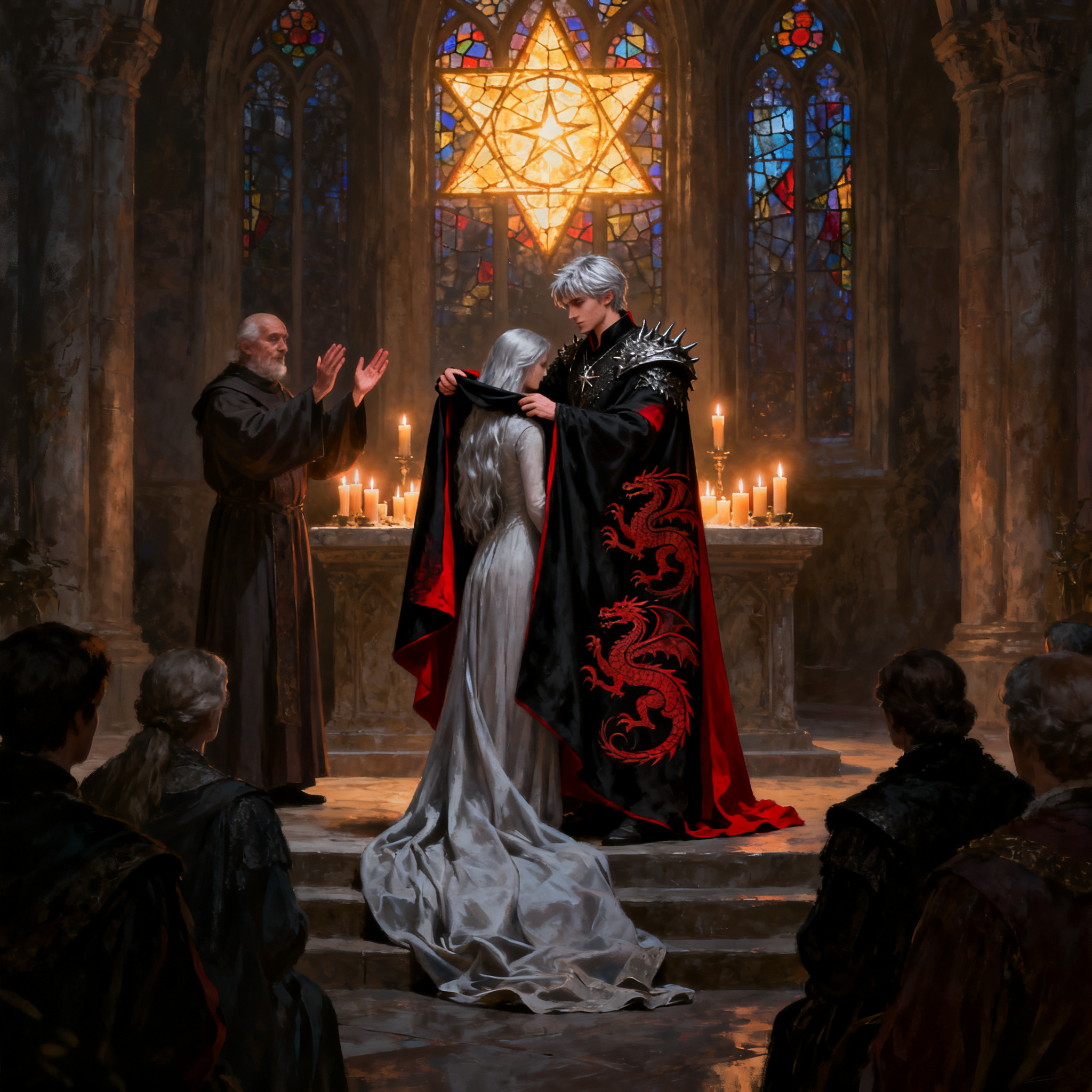
Dear friends, we left Jaehaerys and Alysanne at the altar, wed in secret, their regents outmaneuvered and their marriage already done before anyone could stop it. But dear friends, a secret wedding is the easy part of loving your own sister in front of seven gods and a hundred thousand smallfolk. The hard part came after — convincing an entire realm that what the Faith called sin, the Targaryens called blood.
A Marriage the Faith Already Hated
The trouble was not new. Aegon the Conqueror had wed both his sisters, Rhaenys and Visenya, as Valyria had always wed brother to sister and father to daughter before the Doom swallowed it whole. The Faith of the Seven, born of Andal custom, called it abomination. That anger did not stay quiet — it became the Faith Militant, the Warrior’s Sons and the Poor Fellows, an armed rebellion that bled the realm for years before Maegor the Cruel crushed it with fire and cruelty of his own. Jaehaerys was a boy during those years. He remembered what it cost.
A King Who Would Not Repeat His Uncle’s Mistake
So when Jaehaerys took Alysanne to wife, he did not simply dare the realm to object. He calculated. The Faith Militant that had once marched on kings was scattered and broken. The High Septon of his day was a mild and passive man, in no mood to raise banners. And the smallfolk, unlike in Maegor’s time, had grown fond of their young king — he had not yet given them reason to fear him. Jaehaerys understood something his forebears had not: a crown is never secured by the sword alone. It is secured by what the realm is willing to believe.
The Seven Speakers
He set out to shape that belief on purpose. Three men and four women were sent out across every corner of the Seven Kingdoms — the Seven Speakers, the smallfolk came to call them — carrying tales of Queen Alysanne’s kindness, her piety, her generosity, her tenderness toward her husband and her people alike. It was not truth or falsehood that mattered so much as which story reached the villages first. Jaehaerys made certain it was his.
Two Dragons Across the Realm
Then came the progress itself. Jaehaerys and Alysanne rode out across Westeros not in a wheelhouse behind guardsmen, but on dragonback — Vermithor beneath the king, Silverwing beneath the queen. Every lord who received them was reminded, without a single threat spoken aloud, exactly what stood behind their smiles. Charm and menace, offered together, are difficult to refuse.
A Doctrine Written to Order
But charm and dragons could only carry a marriage so far against a faith that named it sin. So in 54 AC, Jaehaerys did what none of his ancestors had troubled to do — he sat with the Faith itself and built them a doctrine to believe in. With Septon Barth and Septon Oswyck at his side, he argued that the Targaryens were not Andals bound by Andal law, but the last blood of Valyria, where brother had always wed sister beneath different gods and different customs. They rode dragons, as no other men in the world still could. They had been made this way, the doctrine said, and it was not for lesser men to judge what the gods themselves had shaped. High Septon Alfyn accepted it. His successor kept it. The Doctrine of Exceptionalism became, in time, simply what the Faith taught — not tolerance, but truth.
Dear friends, here is the quiet lesson beneath the dragons and the doctrine both: Jaehaerys did not win his marriage by being right. He won it by being patient, by being watched kindly before he was ever judged harshly, and by making certain that when the judgment came, he had already written the verdict himself. Perhaps that is the truest fire a Targaryen ever wielded — not the kind that burns a rival, but the kind that convinces the realm it was never burning at all.
Leave a Reply